Retail Display Solutions Made in the USA: How Domestic Plastic Extrusions Help Businesses Navigate Tariffs
Global trade has entered a period of uncertainty. Over the past year, tariffs and renewed trade disputes have reshaped how manufacturers source materials, produce components, and manage costs. For companies that rely on parts for fixtures, signage, or retail display systems, the effects are especially noticeable.
Prices fluctuate, supply chains stretch across multiple continents, and delivery timelines grow less predictable. In response, many businesses are rethinking where their components come from—and more specifically, whether domestic manufacturing might offer greater stability.
That’s where companies like Jifram Extrusions stand apart. As a U.S.-based manufacturer specializing in plastic extrusions, Jifram provides customers with a dependable alternative during a time when global trade volatility continues to challenge traditional sourcing models.
The Tariff Landscape and Its Impact on Manufacturing
Tariffs are intended to protect domestic industries, but they often introduce ripple effects across supply chains. When import duties increase on materials or finished goods, manufacturers and distributors must absorb or pass along the additional costs.
For companies that rely on imported components, tariffs can significantly raise the price of everyday items used in retail display systems—from structural profiles to decorative trim pieces. Even products as simple as plastic channel profiles or plastic angle components may see cost increases when sourced overseas.
In addition to direct price increases, tariffs create secondary pressures that affect production and procurement. Manufacturers must navigate:
- Higher landed costs for imported goods
- Shipping delays due to customs processing
- Unpredictable currency fluctuations
- Increased logistics and freight expenses
- Uncertainty around future policy changes
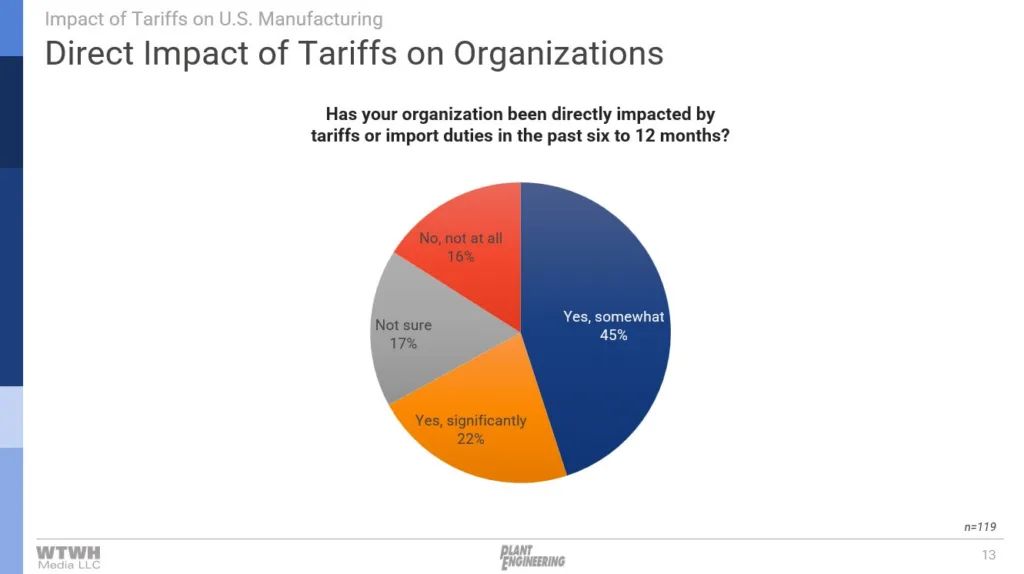
These factors can make long-term planning difficult. What once seemed like a cost-effective overseas sourcing strategy can quickly become unpredictable.
Many businesses are now looking closer to home for manufacturing solutions that provide greater price stability and shorter lead times.
Domestic Manufacturing as a Strategic Advantage
Choosing a domestic partner for plastics extrusion eliminates many of the uncertainties tied to global trade. When production takes place in the United States, companies avoid import duties, reduce transit times, and gain more direct control over quality and scheduling.
For organizations building retail fixtures, signage systems, or lighting assemblies, working with a U.S.-based manufacturer ensures that critical components—like plastic U channel, L channel, or H channel profiles—are produced without the complications that tariffs can introduce.
Domestic manufacturing also allows businesses to respond faster to design changes. Whether developing a new custom profile or adjusting the dimensions of wire moulding components, local production provides the agility needed in fast-moving markets.
Proudly Made in the USA: The Jifram Difference
For more than four decades, Jifram Extrusions has specialized in custom plastic extrusion solutions manufactured entirely in the United States. From concept to completion, every step of the process happens at Jifram’s domestic facility in Sheboygan Falls, WI.
This approach delivers several key advantages for customers navigating the current trade environment.
First, it ensures predictable pricing. Without the complications of international tariffs, businesses can better forecast project costs and avoid unexpected surcharges.
Second, it shortens lead times. Domestic production eliminates long shipping routes and port congestion, allowing projects to move forward quickly without unnecessary delays.
Third, it strengthens quality control. With tooling, engineering, and manufacturing all handled in-house, Jifram maintains full oversight of every stage of production.
For customers building retail display systems or other O.E.M. applications, these advantages translate into reliability—something increasingly valuable in today’s supply chain environment.
What Is Extrusion and Why It Matters
For those new to the process, understanding what is extrusion can help explain why plastic profiles are so widely used across industries.
In a plastic extrusion process, raw plastic material is heated and pushed through a specially designed die. This die shapes the material into a continuous profile that can be cut to length and used in a wide range of applications.
The result is a precise, repeatable component that can serve structural, decorative, or functional purposes. Common extruded shapes include profiles such as j trim, plastic channel, plastic angle, and other engineered designs tailored to specific uses.
Because the process produces consistent shapes efficiently, extrusion plastic components are ideal for applications like signage frames, lighting housings, shelving supports, and other retail display structures.
Custom Solutions for Modern Applications
One of Jifram’s core strengths lies in its ability to produce highly specialized custom plastic extrusion designs. Rather than relying on off-the-shelf parts, customers can work with Jifram’s engineering team to develop a profile tailored to their specific application.
These custom designs may include:
- Structural supports for display fixtures
- Protective trim pieces such as j trim
- C-Channels for shelves to hold price tags
- Decorative plastic angle components
- Mounting or housing solutions like plastic U channel profiles
- Wire management systems such as wire moulding
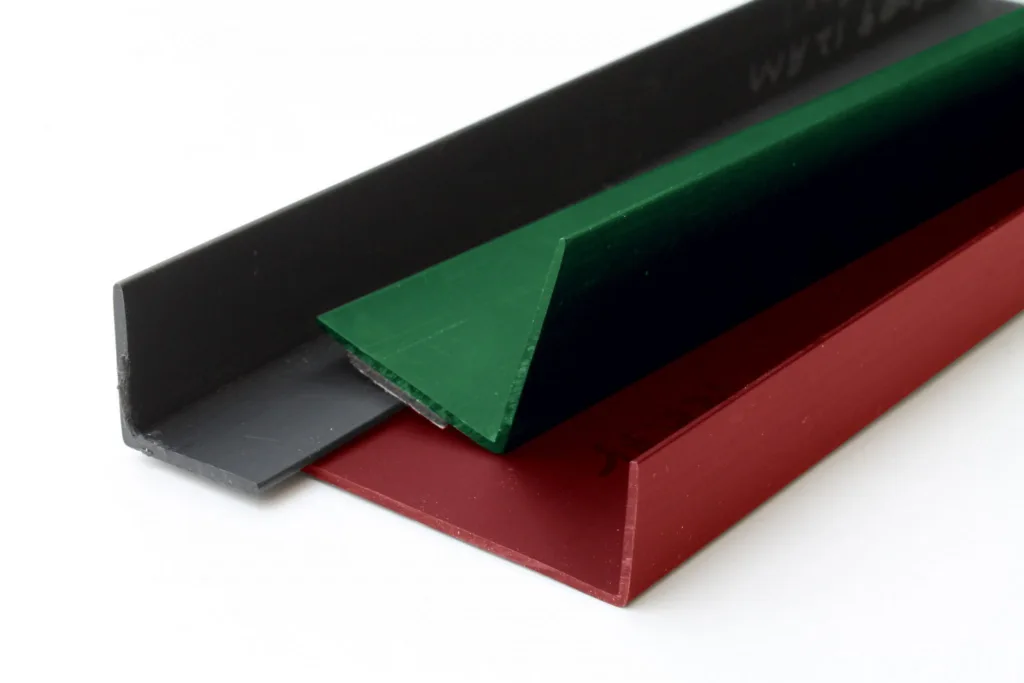
This flexibility allows manufacturers and designers to build displays and products that perform exactly as intended.
A Family-Owned Approach to Manufacturing
Beyond technical expertise, Jifram brings something many larger plastic extrusion companies cannot: a family-owned approach focused on long-term relationships.
For over 44 years, the company has partnered with businesses across industries including retail, refrigeration, and bath enclosures. Customers value the personal service, collaborative design process, and responsiveness that come from working with a team that prioritizes relationships as much as results.
With in-house tooling, flexible order quantities, and direct access to experienced engineers, Jifram provides the type of support that helps projects move forward smoothly—whether producing prototypes or scaling to full production.
Stability in a Changing Global Market
Tariffs, trade policies, and supply chain disruptions are likely to remain part of the global manufacturing landscape for the foreseeable future. For companies seeking stability, reliability, and consistent quality, domestic production offers a practical path forward.
By choosing a U.S.-based partner like Jifram Extrusions, businesses gain access to dependable plastic extrusions manufactured close to home—without the complications and uncertainty that global trade pressures can create.
At a time when sourcing decisions matter more than ever, domestic manufacturing provides more than convenience. It provides confidence.